


UPDATE #2: Bombardier Gripen Canada: what changed after our November 10, 2025 report asked whether Canada might actually build the Saab Gripen at home?
New information has also raised the stakes
Notably, on November 10, we published our first look at the Bombardier–Saab idea (to read first). At the time, the concept still lived somewhere between ambition and rumour. Consequently, the story has moved into the public record, and it has picked up real numbers, real politics, and real friction.
Meanwhile, the central question has not gone away. Specifically, Canada wants fighter jets that can survive in the high north, integrate with allies, and arrive before the CF-18 Hornet runs out of calendar. At the same time, Ottawa wants industrial work that survives the next tariff headline. Overall, that tension now defines the follow‑up.
Bombardier Global Aircraft / Saab GlobalEye
Notably, we stitch together what has emerged since November 10, 2025.
We focus on what is new: confirmed discussions, a larger jobs pitch, a GlobalEye “bundle”, leaked evaluation scoring, and polling that suggests Canadians may be drifting from the original plan. Overall, the result is not a verdict. Instead, it is a map of the decision Canada is walking into.
Bombardier Gripen Canada: from rumour to confirmed talks
In early November, the “build it here” story was still a hypothesis. Specifically, it rested on two signals: Canada’s renewed interest in industrial sovereignty, and Saab’s long‑standing promise to assemble the Gripen in Canada if Ottawa chose it. However, the missing element was confirmation that Bombardier was even at the table.
From hypothesis to confirmed talks
However, that gap closed on November 13, 2025. Reuters reported that Saab was in talks with the Government of Canada and Bombardier about building the Gripen under licence in Canada, with Saab’s chief executive telling The Globe and Mail the plan could create 10,000 jobs.
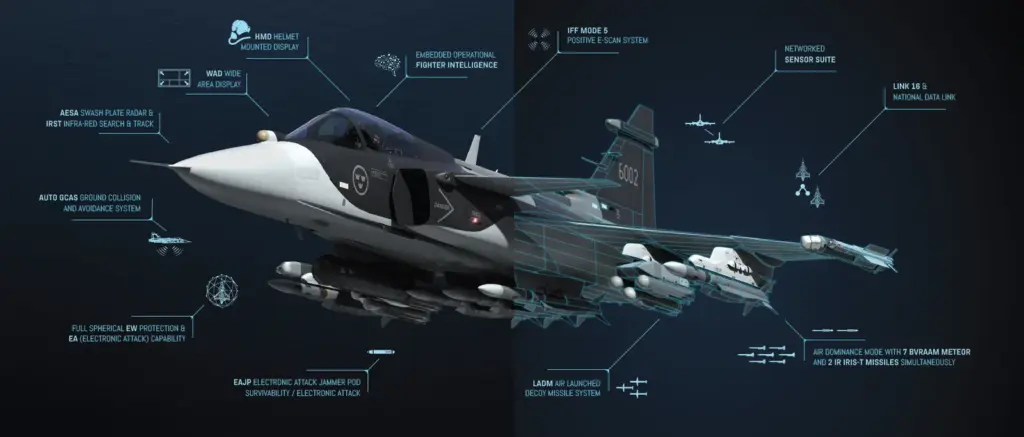
“We can confirm that discussions about Gripen are occurring … Bombardier is open to engage … if the Government of Canada decides to go this route,” — Bombardier statement, Reuters
That sentence matters because it turns a speculative industrial storyline into an operational one. It also clarifies the structure Saab appears to be offering: a licensed production arrangement, not a one‑off offset package. In practice, “under licence” usually means Saab retains design authority, defines the configuration baseline, and controls upgrades. At the same time, a Canadian partner can still own meaningful workshare, from final assembly to sub‑assemblies, harnessing, and test.
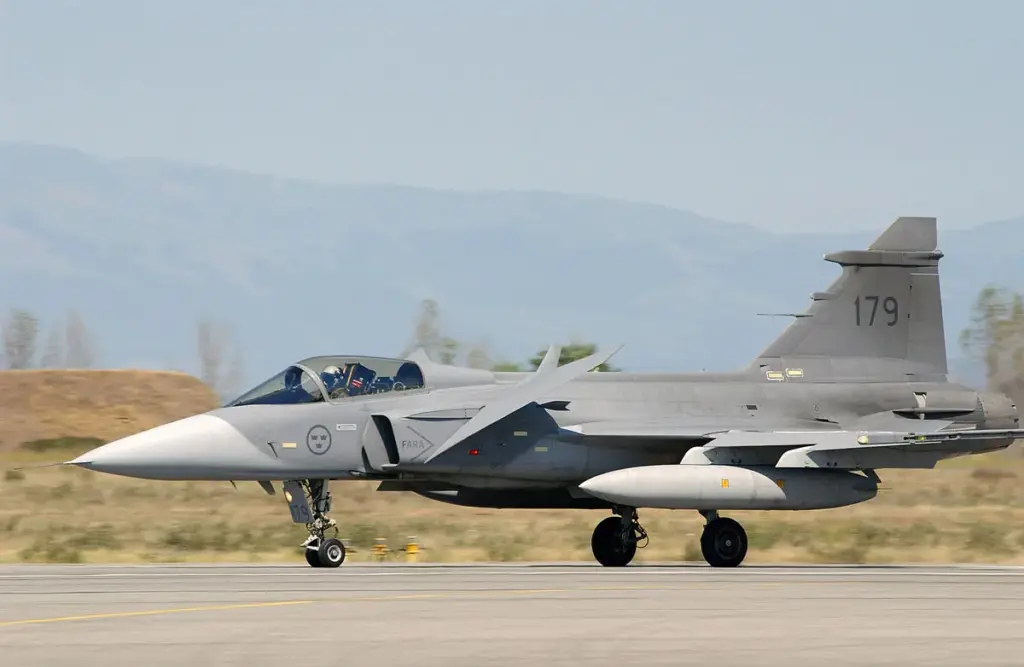
Moreover, the Reuters report connected the talks to a diplomatic moment. Sweden’s King Carl XVI Gustaf and Queen Silvia visited Canada from November 18 to 20, 2025, and the reporting suggested talks would continue during that window. Notably, the optics are not accidental. In practice, fighter procurement tends to move when governments decide a strategic relationship is worth the domestic argument.
What build means in a modern supply chain
Still, the key question is not whether Bombardier can build a fighter. Specifically, the deeper question is what “build” means in a twenty‑first century supply chain. A modern combat aircraft is less like a truck and more like a flying network. However, if Canadian content is mostly structures and paint, Ottawa will still depend on foreign mission software, foreign engines, and foreign weapons integration. Alternatively, if Canadian content includes avionics integration, mission‑system test, and sustainment authority, the sovereignty calculus shifts.
The talk of a Canadian line raises a practical issue that rarely makes headlines. In practice, a fighter production system is not only an assembly hall. Additionally, it is also export‑controlled tooling, digital thread governance, secure data handling, and quality systems that can stand up to wartime surge demands.
In other words, the line has to be as disciplined as a bank vault, and it still has to hit rate.
Notably, a Canadian Gripen line would not appear overnight. In a December 5, 2025 Global News report, Saab chief executive Micael Johansson said a Canadian production hub could take three to five years to set up.
Additionally, he framed the proposal as conditional on a Canadian order, not a pressure campaign. “We’re not campaigning,” — Micael Johansson, CEO, Global News
Still, tooling does not care about election cycles.
Even so, confirmation does not mean a deal is close. Consequently, it means the option is credible enough to brief ministers with a straight face. In Ottawa, that is already a form of progress. It is also a reminder that “review” is not just a process here; it is almost a lifestyle.
Why GlobalEye keeps appearing in the same paragraph as Gripen
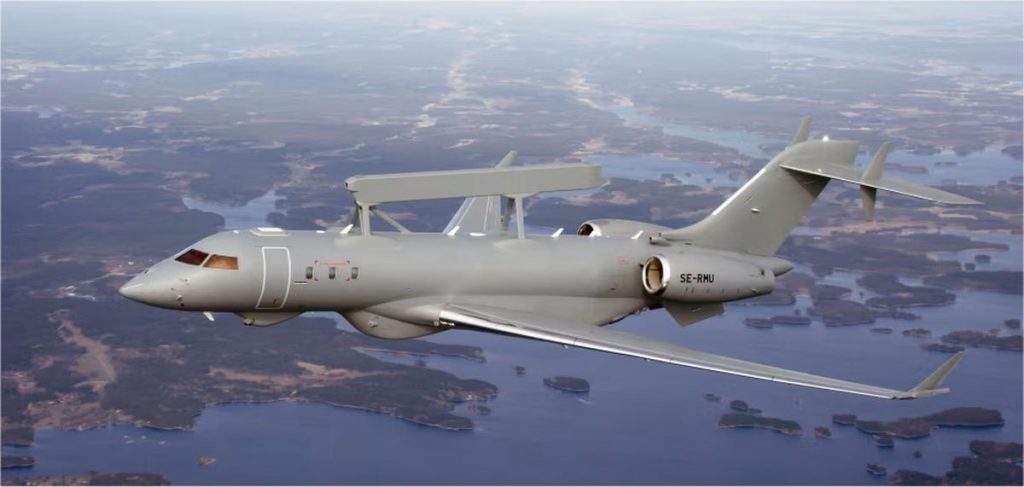
Meanwhile, Canada’s fighter debate now travels with a shadow aircraft. Specifically, that second aircraft is GlobalEye, Saab’s airborne early warning and control platform built around Bombardier’s large‑cabin business jets.
Read more about the Saab GlobalEye in our recent coverage, a military aircraft built using the Bombardier Global South Korea Global 6500: Inside Seoul’s Phoenix AEW&C Decision.
For a concrete example of GlobalEye’s momentum—and why Saab keeps bundling it with broader industrial pitches—see my dedicated report on Fliegerfaust: France orders GlobalEye: Saab’s AEW&C win and Bombardier’s Canadian angle.
However, the pairing may look like marketing. Yet it also reflects how defence procurement works: ministries buy outcomes, not just airframes.
Why GlobalEye is central to the pitch
On November 21, 2025, Reuters reported that Saab was pitching GlobalEye surveillance aircraft to customers in the Gulf. Additionally, in the same interview, Saab’s chief executive said Canada was among the countries receiving GlobalEye offers. “We are campaigning, and we have given them offers,” he told Reuters. — Micael Johansson, CEO, Reuters
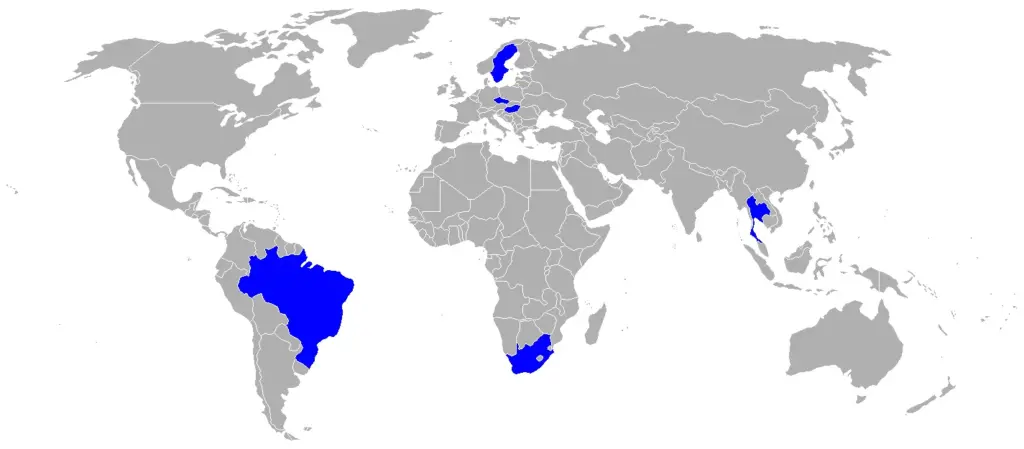
Notably, Johansson also told Reuters that Saab was not actively campaigning to sell Gripen to Canada, but was providing “information” for Ottawa’s decision. Consequently, that framing does two things. First, it acknowledges Canada already selected the Lockheed Martin F-35A Lightning II through the Future Fighter Capability Project (FFCP). Second, it keeps Saab’s pitch inside a broader industrial and capability conversation, rather than treating it as a direct replay of a competition Canada says it already completed.
GlobalEye as an industrial bridge
However, GlobalEye is not just a rhetorical add‑on. It is also an industrial bridge. GlobalEye uses Bombardier’s Global 6000 and Global 6500 business‑jet platforms as the base aircraft, with Saab integrating the Erieye extended‑range radar and mission systems. That relationship is real today, not hypothetical tomorrow. Consequently, Saab can argue that Canada already sits inside a Bombardier‑centred supply chain that supports missionised aircraft.
Additionally, the GlobalEye angle intersects with what Canada actually needs in the Arctic. In practice, intercepts and sovereignty patrols are not only fighter problems. They are also detection, identification, and command‑and‑control problems. Consequently, if Ottawa wants to harden North American Aerospace Defense Command (NORAD) coverage, it needs sensors and decision cycles as much as it needs missiles.
So why bundle the two aircraft?
Because bundling answers two political questions at once. Additionally, it offers a fighter alternative to the F-35, and it offers an industrial ramp that rides on Bombardier’s existing business‑jet production base. Moreover, it is also harder to dismiss in one sentence, which is not a small advantage in the House of Commons.
The upside and risk of bundling
Of course, bundling raises a caution. If Canada takes on both a fighter line and a complex mission‑system aircraft line, it takes on two integration problems at once. In other words, any engineer will tell you that integration is where optimism goes to die. Still, bundling is the kind of offer that looks made for a government that wants jobs, capability, and an alliance narrative in the same press conference.
Bombardier Gripen Canada: the jobs math and what it means
The story’s most visible shift since November 10 has been the jobs number. Specifically, in mid‑November, the pitch was 10,000 jobs. Consequently, last week, by mid‑December, it became 12,600.
Why the jobs number jumped with the Bombardier Gripen Canada
On December 16, 2025, a Globe and Mail item syndicated through Unpublished reported that Saab delivered new proposals to Ottawa forecasting 12,600 jobs if both the Gripen fighter and the GlobalEye surveillance aircraft were built in Canada. Additionally, the same item said Industry Minister Mélanie Joly confirmed the industrial packages arrived, and that the Saab pitch included building Gripens for Ukraine and possibly other export markets.
Notably, Joly has also been explicit about why this industrial file is hot. In a November 19, 2025 Global News report, she argued Canada did not get enough out of the F‑35 industrial package. “The industrial benefits are not enough.” — Mélanie Joly, Industry Minister, Global News
Additionally, AeroTime, citing the same Globe reporting, wrote on December 18, 2025 that Saab said the localisation plan could support up to 12,600 jobs in Canada by assembling Gripen and GlobalEye domestically. (AeroTime, 2025)
Update 2: The missing condition: 12,600 jobs is tied to a specific order size
However, a key parameter was missing from the public debate in December: order volume.
According to reporting based on CBC News, Saab’s 12,600‑job estimate is not a “standalone” promise. Instead, it is tied to a package order: 72 Gripen fighters plus six GlobalEye aircraft. In other words, the headline jobs figure is conditional on the combined buy, not only on “building in Canada”.
The same reporting also makes the geography more explicit: Saab is planning production centres in Ontario and Quebec, supported by a pan‑Canadian supplier network. That matters because “jobs” is not only a national number—it is a provincial map, and that map will shape political durability, supplier selection, and the long‑term sustainment footprint.
Consequently, this changes what the jobs number really is. It is not only a projection. It is also a negotiating lever. If Ottawa buys fewer airframes, delays one half of the bundle, or splits the package across suppliers, the industrial scale changes—and the employment claim changes with it.
What 12,600 jobs really means
However, a bigger jobs number looks like simple inflation. Yet the change likely reflects two underlying moves.
First, Saab appears to have shifted from a fighter‑only narrative to a fighter‑plus‑GlobalEye bundle, which naturally adds labour.
Second, the pitch now seems to include export production, not just Canadian aircraft. Export volume is where a new production line becomes economically plausible.
Still, job claims in defence deals require careful decoding. Specifically, “jobs” can mean direct hires on the line, indirect jobs in the supply chain, and induced jobs in the local economy. Additionally, it can also mean work that displaces other work, rather than net new employment. Consequently, 12,600 jobs is not a single number. It is a thesis about scale, duration, and political value.
However, the thesis still lacks a public spreadsheet. “… not in a position to share specific breakdowns,” — Jenny Gerdes, Saab spokesperson, Global News
Additionally, Ottawa may not have the underlying math either. “ISED does not have any details on the methodology underlying the estimate,” — Justin Simard, ISED spokesperson, Global News
Consequently, the number now has critics as well as believers. One analyst called the 10,000‑job claim “completely unrealistic.” — Richard Shimooka, Macdonald-Laurier Institute, Global News
Canada has learned that aerospace work can vanish quietly after the photographers leave. In short, if job numbers were horsepower, Ottawa would already be supersonic. Therefore, the real question is whether the work packages are durable, exportable, and controlled enough to survive a change of government.
Pierre Elliott Trudeau once asked, “What does Quebec want?” Now Ottawa faces a different question: if it’s taking Saab’s jobs pitch seriously, what should Canada demand in writing?
Update 2: What Ottawa should demand in writing
First, Ottawa should separate “work in Canada” from “work controlled by Canada”. A Canadian assembly line that relies on foreign intellectual property, foreign software baselines, and foreign export approvals can still leave Canada exposed during a crisis.
Second, Ottawa should insist on measurable work packages, not aspirational language. That means listing which structures, which harnesses, which mission‑system integration tasks, and which sustainment activities occur in Canada. It also means naming the Canadian firms expected to deliver them.
Third, Ottawa should attach schedule discipline to the industrial promise. If Canada is buying the Gripen to gain sovereignty, it cannot accept a schedule that leaves the Royal Canadian Air Force (RCAF) flying CF-18s into the 2040s. Industry can build miracles, but only if the contract forces miracles to happen on time.
Fourth, Ottawa should treat sovereignty as an IP and technical‑data issue, not a slogan.
Notably, this is now being said out loud. In early January 2026, Industry Minister Mélanie Joly signalled she wants more research and development in Canada and “much more” intellectual‑property control as part of any F‑35 industrial outcome.
Meanwhile, Saab says Canadian officials are asking detailed questions that point to the same underlying issue: job locations, collaboration with domestic firms, and the transfer of technical data related to aircraft design and production—and Saab says it is prepared to transfer that data.
In practice, this is the difference between “final assembly in Canada” and sovereign capability. A licensed line can still leave Canada dependent on foreign design authority and foreign upgrade gates. Technical data rights, configuration control, and in‑country sustainment authority are the levers that decide whether Canada can actually govern the fleet it pays for.
First F-35A in Canada for 2028
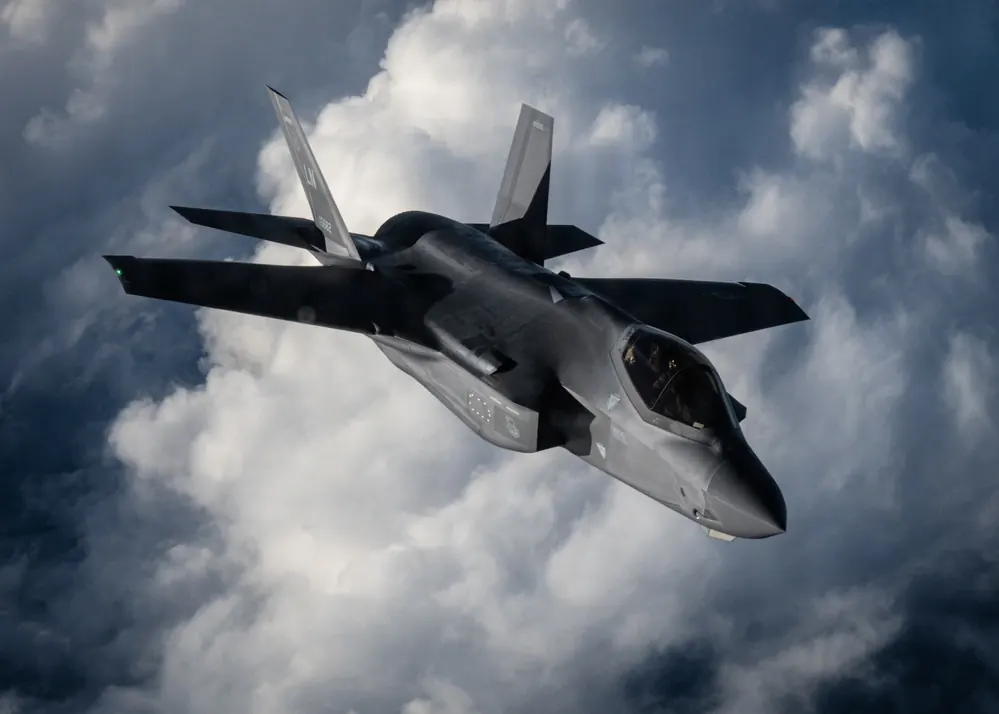
Notably, Canada’s current plan calls for the first F‑35A (CF‑35A) to be delivered to Luke Air Force Base (AFB), Arizona in 2026 for Royal Canadian Air Force (RCAF) training, with the first aircraft arriving in Canada in 2028.
Finally, Ottawa should remember a simple truth. Overall, aerospace jobs are real, but they are not free. Still, a country can buy industrial capacity. It can also overpay for it. The trick is not to confuse a ribbon‑cutting with a strategy.
The capability scorecard: why the F-35 dominated the first evaluation
Meanwhile, the jobs narrative supplies political fuel. In contrast, the capability narrative adds technical gravity. Notably, since November 10, a major data point has entered the debate: leaked scoring from the FFCP evaluation.
What the leaked FFCP scores show
Notably, on November 27, 2025, AeroTime reported that internal data obtained by Radio-Canada showed the F-35 was the clear winner in Canada’s fighter evaluation. The article said the F-35 scored 57.1 out of 60 points overall, while the Gripen E scored 19.8 points. Airbus described the terms as favoring the F-35. (AeroTime, 2025) To be precise, for the specialist, the FFCP capability evaluation compared the F‑35A with Saab’s Gripen E, based on Saab’s 88‑aircraft Gripen E proposal and its associated support/training and industrial benefits package.
Notably, those totals matter, but the weights matter more.
Why the weighting matters more than the headline score
In procurement, a spreadsheet can hit harder than a missile.
Specifically, AeroTime reported that mission performance carried the heaviest weighting, and that the F-35 outpaced the Gripen heavily in that category. Additionally, it also reported a wide gap in upgradability. However, in sustainment, the gap narrowed. Consequently, that detail matters because it hints at Saab’s strongest argument: day‑to‑day readiness and operating economics.
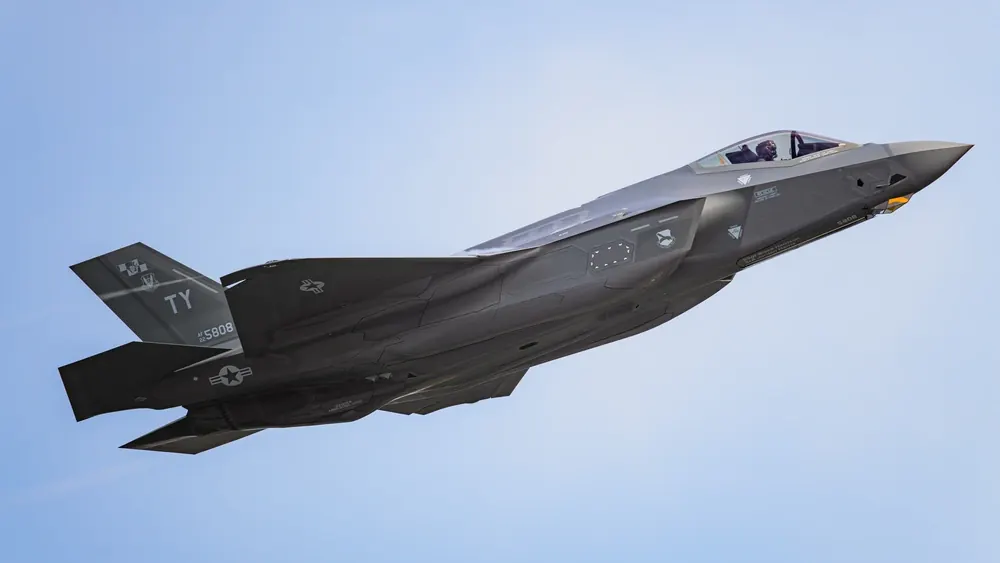
However, the disclosure also reframes a mixed‑fleet debate. Consequently, if Canada’s formal evaluation scored the Gripen far lower on rated criteria, any decision to buy it now must either accept a lower‑capability fleet or argue that industrial sovereignty outweighs the framework Canada built. That is not impossible, but it is politically explosive.
How the scores reshape the mixed‑fleet debate
Notably, former RCAF commander Lt.-Gen. (Ret.) Yvan Blondin put the point bluntly in comments cited by AeroTime interview at Montréal 98.5 FM. “If we send our sons and daughters into combat, it will be in these aircraft,” he said. “… you put them in an F-35 against Chinese or Russian jets in the Arctic, the aircraft scores 95%. If you put them in a Gripen, it’s 33%. That should be the first factor we consider when deciding which fighters to buy.” — Lt.-Gen. (Ret.) Yvan Blondin, former RCAF commander, via AeroTime
Of course, it is easy to dismiss that as rhetoric. Yet Blondin’s core message is operational. However, if Canada expects to fight alongside the United States and other allies against peer threats, it needs an aircraft the alliance believes can survive in that environment. Overall, that is the value proposition of a fifth‑generation stealth fighter.
Read Fliegerfaust’s analysis, “F‑35 Cancellation: Economic Risks & the Gripen Alternative for Canada,” published in March 2025.
Moreover, the cost pressure behind Ottawa’s review is not theoretical. In June 2025, Reuters reported that the Auditor General said Canada’s F-35 programme costs could rise to between C$27.7 billion and C$33.2 billion, and flagged weaknesses in cost tracking and sustainment planning.
Cost pressure and what it changes
At the same time, evaluation scoring is not scripture. Specifically, it reflects assumptions about missions, basing, data links, weapons, and future upgrades. Consequently, if Canada’s strategic priorities shift, the scoring weights can shift too. Moreover, the FFCP scoring did not occur in a world where Canada was contemplating joining a European defence fund, re‑litigating U.S. dependence, and using industrial policy as a first‑order defence variable. Overall, that is the world Ottawa lives in now.
Additionally, for background on the political logic behind Ottawa’s rethink, see our coverage of the F-35 review debate.
So, the capability scorecard does not end the debate. Consequently, it changes the burden of proof. However, if Canada moves away from the F-35 in significant numbers, it must explain how it will mitigate the capability delta. Additionally, it must also explain how it will do so without breaking NORAD commitments. Overall, that is a high bar, and it will not be cleared by job numbers alone.
Meanwhile, for Saab, the leaked scoring is an awkward headwind. Still, the company’s renewed pitch suggests it believes Ottawa is willing to trade some performance margin for industrial and political goals. In other words, the debate is no longer only about which jet wins in a simulator. It is about which jet fits Canada’s national story.
The Arctic question: runways, diversions, and the single‑engine debate
Overall, Canada’s fighter debate often drifts into spreadsheets. Yet the Arctic has a way of turning spreadsheets back into geography.
Arctic basing is the real constraint
Specifically, to cover its northern approaches, Canada relies on a set of forward operating locations used for deployments and exercises. Notably, in a June 2025 interview, the Canadian commander of NORAD described the runways at those locations as a constraint, including a 6,000‑foot runway at Inuvik that supports CF-18 operations. Additionally, he also described plans to extend that runway to 9,000 feet, with completion targeted for 2028. (The War Zone, 2025)
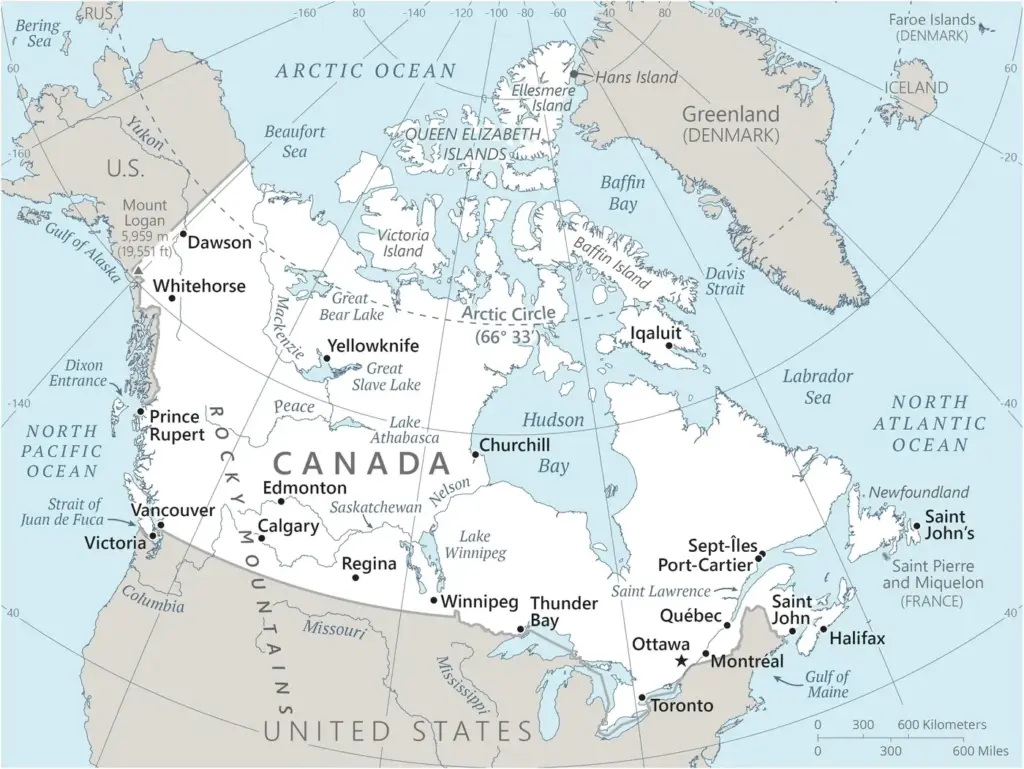
Separately, Canada’s own infrastructure material explains how runway and ramp projects in the north support fighter operations. Notably, the Department of National Defence notes that several sites were built or improved during the Cold War for deployments, exercises, and operations.
Why twin‑engine redundancy matters in the high north
Consequently, that operational reality feeds a question Canadians ask more often than other air forces. Does Canada need a dual‑engine fighter to operate safely over the high north?
Notably, the current CF-18 Hornet is a twin‑engine aircraft. For decades, that redundancy has offered a form of risk management in remote airspace, where an engine failure can turn into a survival problem long before it becomes a maintenance problem. Moreover, northern deployments mean cold‑soaked systems, crosswinds, and limited alternates (airports). In practice, the map is big, and the divert list is short.
However, engine reliability has improved dramatically over the last half‑century. Notably, single‑engine fighters operate safely every day in the United States, Europe, and Australia, including over water. Consequently, “single engine” is not a veto. It is a variable.
Search and rescue matters more than the engine count
Instead, what matters more is the total rescue and recovery system around the aircraft. Consequently, if Canada chooses a single‑engine fleet, it needs robust search and rescue coverage, reliable divert infrastructure, and a basing concept that assumes the Arctic will remain unforgiving. Additionally, it also needs an aircraft whose maintenance model supports high readiness in austere conditions, because the north is not a place where you can hide behind a parts shortage.
So where does the Gripen fit?
Gripen’s dispersed‑ops strengths and its limits
Notably, Saab’s doctrine has long emphasised dispersed operations, rapid turnaround, and high availability from limited infrastructure. Consequently, those are strong themes for Canada’s north. However, the Gripen E is still a single‑engine fighter, and it still depends on a global supply chain for many components. Consequently, if Canada wants to treat it as a sovereignty tool, it must ensure it can sustain it during a crisis.
Meanwhile, where does the F-35 fit?
F-35 capability versus Arctic sustainment complexity
Notably, the F-35 brings stealth, sensor fusion, and network integration that matter in a contested environment. Yet the aircraft also arrives with a complex sustainment ecosystem that Canada must plug into. Notably, some of that ecosystem is improving. However, some of it remains sensitive to software baselines and upgrade schedules. In the Arctic, complexity can be an adversary.
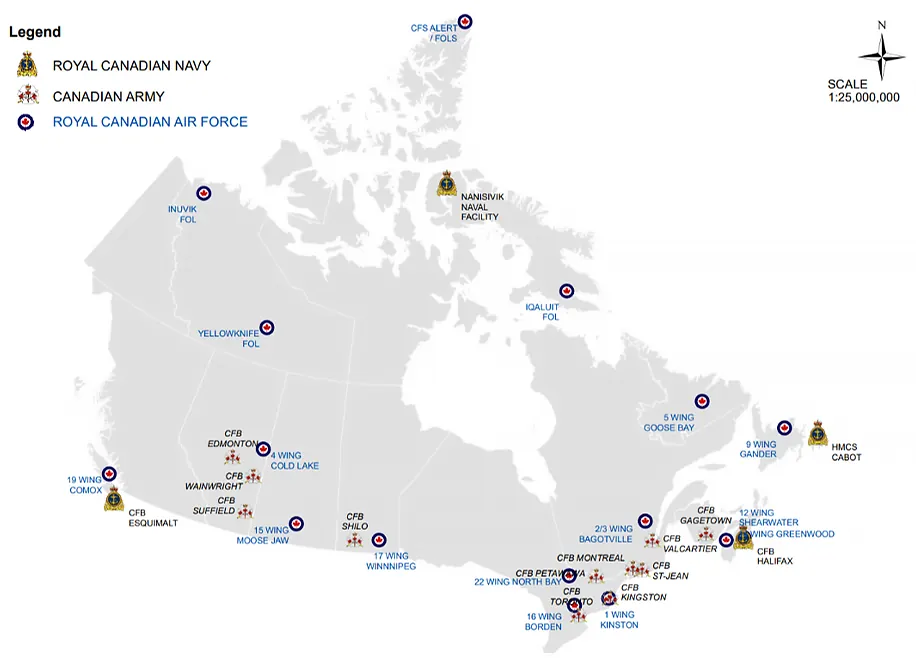
Notably, the War Zone interview included a line that should sit at the centre of this debate.
“Yeah, I think very close. There is one issue, runway land. We have four Forward Operating Locations (FOLs) in the Arctic. One in Inuvik up by the Alaskan border. One in Yellowknife, kind of in the middle of the Canadian Arctic. One on Baffin Island. It’s called Iqaluit, and I’ve got a deployed operating base with a much larger footprint in Goose Bay, Labrador, which is north of Quebec, on the landmass. So those four sites are where I would disperse my aircraft to, just to shorten my response times.” — Maj. Gen. Chris McKenna, The War Zone. I suggest you read this very interesting interview of December 18, 2025 over at The War Zone.
In short, that is not a poetry line. Overall, it is a procurement requirement. Moreover, it is also a reminder that Canada cannot buy its way out of geography, no matter how good the marketing deck looks.
The infrastructure decision hiding inside the fighter decision
Consequently, if Ottawa wants a fighter decision that survives the next decade, it must treat northern infrastructure as part of the aircraft, not a separate capital project. Otherwise, Canada will keep buying jets that look fantastic in hangars and struggle at the edge of the map. Consequently, in that scenario, the debate between Gripen and F-35 becomes almost secondary, because neither aircraft can fix a runway in a blizzard.
Still, Canada can fix runways. Additionally, it can also fix the governance that slows projects down. If Ottawa wants an “Arrow moment” (Canada design and built CF-105) for the 2020s, building the northern basing network might be the least glamorous, most important part of it. Overall, the irony is that concrete may end up doing more for sovereignty than carbon fibre.
Bombardier Gripen Canada: politics, polls, and procurement pressure
Of course, once procurement becomes a national argument, polling is inevitable. Notably, since our November 10 post, polling has entered the story in an unusually direct way.
What the EKOS numbers say
Notably, on December 18, 2025, commentator Spencer Fernando drew attention to an EKOS survey that has been circulating in the fighter debate. (Spencer Fernando, 2025)
According to the EKOS release, 43% of respondents said Canada should switch to Gripen for future purchases, versus 13% who preferred additional F-35s. Meanwhile, 29% favoured a mixed fleet.
Why polling matters and why it misleads
Still, polling is not policy, but it shapes the room where policy is made. In Ottawa, polls are like afterburners: loud, exciting, and easy to misread. However, if a significant share of the public sees the Gripen as a sovereignty symbol, ministers will feel pressure to “do something” that looks like independence (from the US pressure). Meanwhile, if pilots and commanders see the F-35 as a survival tool, the military will resist symbolic procurement.
Meanwhile, think tanks have started to sharpen their knives. The Macdonald-Laurier Institute argued that cancelling the F-35 in favour of the Gripen would “cripple” Canada’s air force. (Macdonald-Laurier Institute, 2025) However, that framing is provocative, but it reflects a genuine fear inside parts of the defence community. Many of the F-35 suppliers are Canadian companies.
The split between public politics and operational reality
However, the public does not vote on mission‑system architecture. Instead, Canadians vote on jobs, costs, and sovereignty. Consequently, the Gripen pitch is politically potent, even if the FFCP scoring suggests it is operationally weaker on rated criteria.
So how does Ottawa balance these forces?
Three pressures Ottawa cannot dodge
First, it needs to separate the near‑term fleet from the long‑term fleet. Notably, Canada has already committed to the first 16 F-35s. Consequently, that initial tranche will establish training pipelines, infrastructure, and tactics. Therefore, the longer‑term question is whether Canada buys the remaining aircraft as F-35s, mixes in another type, or attempts a more radical shift.
Near‑term certainty versus long‑term flexibility
Second, it needs to be honest about mixed‑fleet complexity. However, a mixed fleet can reduce dependence on one supplier, and it can create political space. Yet it can also double training burdens, spare‑parts inventories, software support contracts, and weapons integration timelines. Moreover, in a crisis, a mixed fleet does not always provide flexibility. Additionally, it can also create bottlenecks.
The hidden cost of a mixed fleet
Third, Ottawa needs to understand that industrial policy is now part of national defence policy. Notably, the tariffs and trade tension of 2025 have made that unavoidable. Consequently, once that door opens, the defence file starts to resemble economic development. In that world, Saab’s jobs pitch lands on fertile ground.
Additionally, there is also a more human factor. Notably, the phrase “build it here” carries emotional weight in Canadian aerospace, especially in Québec and Ontario. Specifically, it evokes pride, capability, and the idea that Canada can still do hard things. Consequently, in that sense, Bombardier Gripen Canada is not only a procurement option. Moreover, Bombardier Gripen Canada is also a referendum on national confidence.
Even so, procurement cannot live on confidence alone. Additionally, it must also live on performance, schedule, and sustainment. However, if Ottawa treats the poll as a mandate to improvise, the RCAF will pay the bill later in readiness and risk. Overall, in Canada, we often say we want sovereignty. The hard part is paying for it without paying twice and recognising that roughly 80% of what Canada builds is sold into the United States, which is a long way from an independent economy.
Europe’s SAFE fund and Canada’s defence‑industrial pivot
Overall, defence procurement is not only about aircraft. Additionally, it is also about the geopolitical ecosystem those aircraft sit inside. Notably, in December 2025, Canada took a step that signals a broader pivot.
SAFE and the new procurement narrative
Notably, on December 1, 2025, the Canadian government announced it joined the European Union’s Security Action for Europe (SAFE) defence fund as part of an effort to diversify military spending and reduce dependence on the United States.
SAFE is more than symbolism, it creates a framework where European‑aligned procurement becomes easier to justify, finance, and coordinate. If SAFE sounds like an acronym designed by a committee, that is because it was. Consequently, for a country considering a Swedish fighter, that matters. Moreover, it also changes the rhetorical landscape. Consequently, Ottawa can now argue that buying European is not “turning away” from allies. It is aligning with a different set of allies, in a formal structure.
Why NORAD still anchors the decision
However, SAFE does not erase Canada’s continental reality. Still, NORAD remains a binational command with the United States. Consequently, Canada’s fighter fleet will continue to train, operate, and integrate with U.S. forces daily. Any move that significantly reduces U.S. interoperability will face resistance inside the defence establishment, and likely outside it.
Hence, this is where Bombardier’s own trajectory becomes relevant. Meanwhile, while the fighter debate plays out, Ottawa is also building Canadian aerospace work through other defence buys.
Bombardier’s defence footprint beyond fighters
Separately, on December 12, 2025, the Government of Canada announced a contract with Bombardier to acquire six Canadian‑built Global 6500 aircraft for the RCAF under the Airlift Capability Project – Multi‑role Flight Service. The fleet will replace the Bombardier CC‑144 Challenger. Notably, Bombardier has supplied aircraft to the Canadian military before.
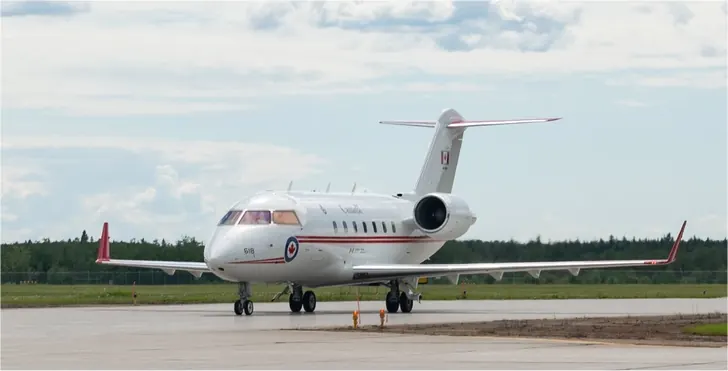
Notably, Ottawa pegged the deal with Bombardier at about C$753 million, with the first aircraft expected by summer 2027 and initial operational capability targeted by the end of 2027.
The government framed the jets as multi‑role utility aircraft for worldwide flights, including aeromedical evacuations, disaster relief, humanitarian aid, and national security operations, with training and military modifications included.
Moreover, Ottawa said the build would leverage more than 60 Canadian suppliers and projected more than 900 direct and indirect Canadian jobs tied to manufacturing and the supply chain.
That matters for two reasons.
First, it shows Ottawa is willing to put contracts, not just speeches, behind a “build in Canada” narrative. Second, it highlights how Bombardier fits into defence even without building fighters, but that one was an easy one. Notably, business‑jet platforms have become the foundation for multi‑role intelligence and mobility aircraft around the world. Bombardier can expand its defence footprint through missionised platforms, even if the fighter question remains unsettled.
Gripen upgrades and what Canada would be buying into
Meanwhile, Saab has been working to show that Gripen is not a static product. On December 19, 2025, Saab said it received an order from Sweden’s Defence Materiel Administration to support development of the Gripen system through 2026–2028, with an order value of about 2.5 billion Swedish kronor.
“This order ensures that Saab’s development resources meet these requirements … upgraded to meet today’s and tomorrow’s threat landscape,” — Lars Tossman, head of Saab’s business area Aeronautics, Saab
However, that is not a Canadian decision, but it is relevant context. Consequently, if Canada ever buys into a foreign fighter, it buys into the pace at which that fighter evolves. Notably, in the current threat environment, upgrades are not optional. They are the aircraft.
So what does SAFE do to the Canadian debate?
Bombardier Gripen Canada – Fighters, sensors, or both
Notably, Ottawa already chose a sensor‑heavy aircraft for the sea: purchasing 16 Boeing P‑8A Poseidon. It is being acquired under the Canadian Multi‑Mission Aircraft project to replace the CP‑140 Aurora.
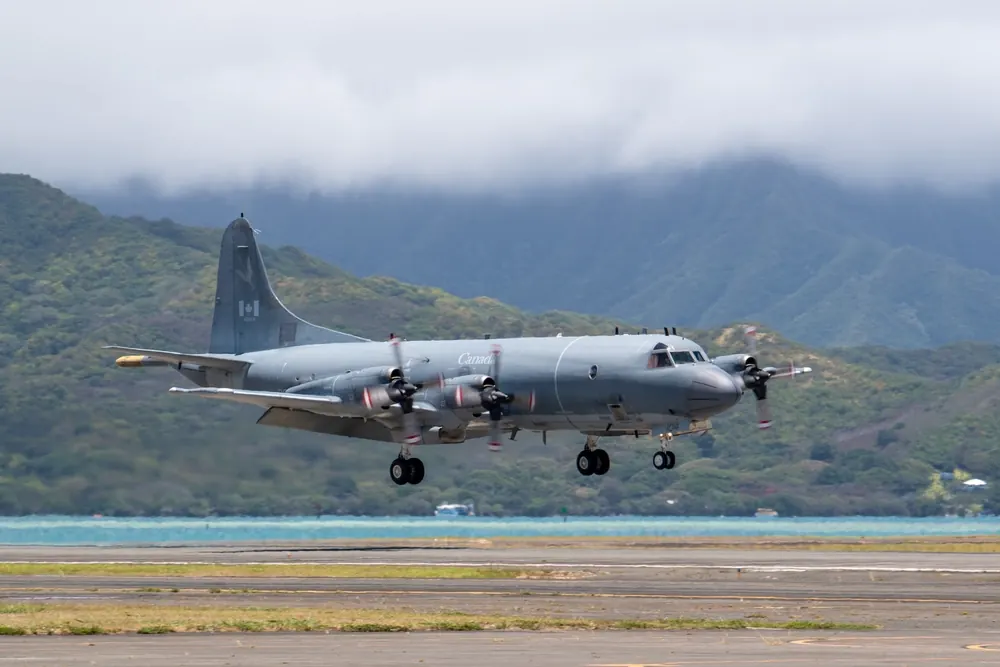
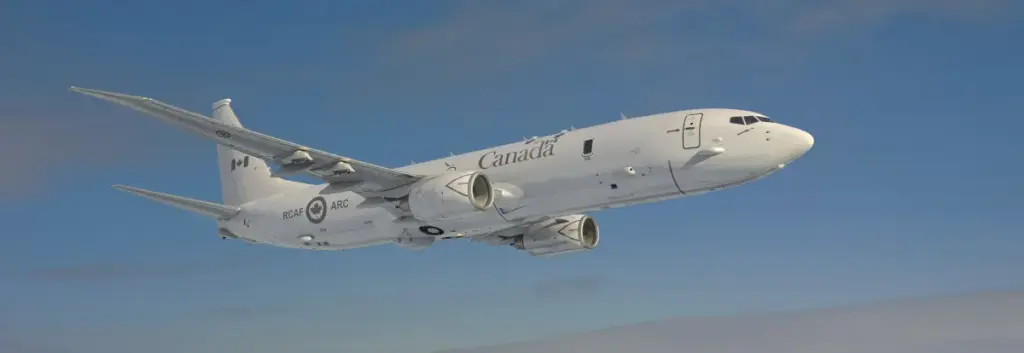
The P-8A fleet will operate from 14 Wing Greenwood in Nova Scotia and 19 Wing Comox in British Columbia.
For background, Ottawa’s project overview is here: Canadian Multi‑Mission Aircraft project.
However, the P‑8A’s sensors are built for maritime patrol and undersea warfare, not air‑defence battle‑management.
Maritime sensors versus air‑defence sensors
Separately, National Defence has an Airborne Early Warning & Control project to deliver a Canadian airborne early warning and control (AEW&C) capability for the North American Aerospace Defense Command (NORAD) Aerospace Warning and Control (AWAC) mission. Notably, that would add a capability the Royal Canadian Air Force (RCAF) does not field today, rather than replacing an existing fleet.
National Defence describes the AEW&C requirement as a new Canadian Armed Forces (CAF) capability and estimates a fleet of six aircraft in its Defence Capabilities Blueprint entry for Airborne Early Warning & Control.
AEW&C would be a new RCAF capability
In practical terms, AEW&C aircraft act as airborne radar pickets and command posts, extending detection and cueing fighters over the North. Therefore, the real “sensors” choice is whether Canada complements P‑8 with AEW&C, or leaves that air‑picture role to allies and ground systems alone.
What “sensors‑first” looks like for NORAD
Consequently, it gives Ottawa a policy frame that makes a Swedish‑Canadian partnership feel like strategic alignment, not a procurement detour—and it could also support a case for Canada to acquire Saab’s GlobalEye airborne early warning and control (AEW&C) aircraft based on Bombardier’s Global platform. Additionally, it also invites a harder question: if Canada wants to diversify away from U.S. dependence, should it do so through fighters, through sensors, or through both?
Overall, a cautious answer would start with sensors. Specifically, acquiring the Saab GlobalEye early warning and command‑and‑control capabilities can strengthen NORAD without forcing Canada to abandon the F-35. In contrast, swapping fighters midstream creates schedule risk and operational disruption.
From the Saab website: Saab ready to offer GlobalEye for Canada’s Airborne Early Warning and Control program
Yet Ottawa is not operating in a cautious mood. Instead, it is operating in a moment of trade pressure, industrial anxiety, and political expectation. Consequently, in that atmosphere, a Gripen line becomes a symbol of agency. Moreover, SAFE, in turn, becomes the diplomatic story that makes that symbol easier to sell.
Bombardier Gripen Canada – What will Ottawa do?
Still, symbols do not intercept bombers. Instead, aircraft do the intercepting. Consequently, Canada’s defence‑industrial pivot must remain tethered to operational reality. Overall, the most elegant procurement narrative in the world is useless if the jets arrive late, lack weapons integration, or cannot sustain high readiness in the north.
Still, if there is a silver lining, it is that Ottawa appears to be treating defence procurement as a system. SAFE, Global 6500 mission aircraft, GlobalEye proposals, and fighter choices now sit on the same strategic board. For once, the pieces are at least visible. Finally, the challenge is to move them without knocking over the board.
Conclusion: the opportunity is real, and so is the risk
Overall, Canada did not invent the “build it here” fighter dream, but it keeps returning because it touches a nerve. Specifically, it promises sovereignty, jobs, and pride in the same package. Notably, since November 10, 2025, the Bombardier–Saab concept has moved closer to reality through confirmed discussions, a more detailed industrial pitch, and a broader package that includes GlobalEye.
What changed since November 10
Bombardier Gripen Canada has become a test of whether industrial policy can coexist with alliance readiness.
However, new information has also raised the stakes. Notably, the leaked FFCP scoring suggests the F-35 dominated the rated evaluation criteria. Consequently, that creates a credibility problem for any policy shift driven mainly by jobs and politics. Additionally, it also forces Ottawa to answer a blunt question: if the performance gap is real, how much capability is Canada willing to trade for industrial control?
The credibility test Ottawa must pass
At the same time, the debate is no longer only about aircraft performance. Specifically, it is now about whether Canada wants to anchor its defence posture inside a U.S.-centred ecosystem, or whether it wants to diversify meaningfully through European partnerships such as SAFE. Overall, the truth is that Canada may want both. Yet the path to “both” can easily become a mixed‑fleet compromise that satisfies no one and strains budgets.
Bombardier Gripen Canada – A strategy choice, not just an aircraft choice
Overall, in my view, Ottawa should treat the Bombardier Gripen Canada idea as a serious industrial option, not as a protest slogan.
Yet it should also treat capability as the first constraint, not an inconvenience. If Canada wants to build fighters, it must also build the northern infrastructure, the sustainment authority, and the software governance that make those fighters sovereign in practice.
Bombardier Gripen Canada – Final question
Overall, a country can choose an aircraft, or it can choose a strategy. Consequently, the best outcomes happen when the aircraft is a consequence of the strategy, not the substitute for it. Notably, Canada is standing at a rare intersection of industrial opportunity and strategic urgency. Will it use that moment to build durable capability, or will it chase a headline and pay for it twice?
Leave your answers and comments below and on our Fliegerfaust Facebook page.
Sources
- Reuters — Saab in talks with Canada, Bombardier to build Gripen fighter jets, Globe and Mail reports (November 13, 2025).
- AeroTime — F-35 clear winner over Gripen in Canada review (November 27, 2025).
- Reuters — Saab pitches GlobalEye surveillance planes to Qatar, Saudi Arabia (November 21, 2025).
- Reuters — Canada’s F-35 fighter jet costs rise up to $33 bln, auditor general says (June 10, 2025).
- Unpublished (source feed: The Globe and Mail) — Building military aircraft in Canada would create more than 12,000 jobs, Saab tells Ottawa (December 16, 2025).
- AeroTime — Saab says Gripen, GlobalEye production in Canada could support over 12,000 jobs (December 18, 2025).
- The War Zone — The Canadian NORAD commander on Arctic basing shortfalls, Ukraine war lessons, and more (June 2025).
- Department of National Defence — North infrastructure (accessed December 20, 2025).
- AP News — Canada joins EU defense fund in effort to diversify military spending (December 1, 2025).
- Government of Canada (Defence Investment Agency) — Government of Canada announces contract to deliver new multi-role aircraft for Royal Canadian Air Force (December 12, 2025).
- Saab — Saab receives order for development resources for Gripen (December 19, 2025).
- Saab — GlobalEye (accessed December 20, 2025).
- EKOS Politics — Canadians favour Gripen over F-35 (December 2025).
- Spencer Fernando — Poll: Canadians support future purchases of Gripens over F-35s by 30-point margin (December 18, 2025).
- Macdonald-Laurier Institute — Cancel the F-35? JAS 39 Gripen fighter would cripple Canada’s Air Force (2025).
- Global News (The Canadian Press) — Industry experts question Saab’s pitch to bring 10,000 jobs to Canada (December 5, 2025).
- Global News — Canada needs ‘more details’ on Swedish Gripen fighter jet deal, Joly says (November 19, 2025).
- Government of Canada — Canadian Multi‑Mission Aircraft project (December 2025).
- Department of National Defence — Airborne Early Warning & Control (December 2025).
- The War Zone — Canadian NORAD Commander’s View On Future F-35 Fighter Force (December 18, 2025).
- FlightGlobal — Canada to push Lockheed for more F‑35 jobs ahead of fighter procurement decision (January 5, 2026).
- Defence Industry Europe — Saab links 12,600 Canadian jobs to proposed purchase of 72 Gripen fighters and six GlobalEye aircraft (January 16, 2026).
For full details, please refer to our Disclaimer page.
The appearance of U.S. Department of War (DoW) visual information does not imply or constitute DoW endorsement.

The FFCP evaluation score of 2021 for the Gripen fighter jet is a fake score, because this fighter jet had the General Electric F414-G engine. It is a fact that the pro-Russia and anti-Europe maniacs in power in Washington will never approve the export license of this engine to Canada. Therefore, the Swedish fighter jet would require an engine that is not made in the US. And that is exactly what the Swedes propose and offer to Canada. They have a new British Rolls-Royce EJ230 engine for their fighter jet. It is most interesting that with the Rolls-Royce engine the Gripen’s flight performance improves substantially, and so does its evaluation score.
Furthermore, the article does not give the details of the evaluation test. It does not tell if the tested 2021 Gripen version was the E/F version that is currently being offered to Canada [most probably not], and if the excellent new EW (electronic warfare) kit that comes with the E/F version was also integrated with the Gripen that was tested in 2021 [most probably not]. The Gripen ‘score’ is much higher with the kit.
Plain logic dictates Canada’s need for the Gripen E/F jet fighter.
To your question, the FFCP capability evaluation compared the F‑35A with Saab’s Gripen E, based on Saab’s 88‑aircraft Gripen E proposal and its associated support/training and industrial benefits package. I’ve updated the post, you might have to “refresh/reload” the page.
You comments are very appreciated!
Thank you!
Sylvain
A very interesting and valuable contribution to the political/military/industrial dilemma our country is facing. Why are we even considering this 20th century technology for 21st century warfare? We read very little of the actual role of fighter aircraft in the growing number of hotspots around the world as drones and missiles appear to have replaced them at much less cost and greater effectiveness. The significant distances between Canada/USA and Russia/China combined with the limited range of the two proposed aircraft, especially the F35, seem to make their value in a real war as minimal. Dogfights and heavy bombers appear to be an unlikely part of the war reality in the Arctic in future conflicts. Perhaps, neither of the two aircraft, is the best solution and building a defence for this century should not include fighter aircraft designed at least 25 years ago.
Well researched. Canada adopting a mixed fleet strategy makes sense. Australia is going with a mixed fleet of F35s and Super Hornets for many of the same reasons.
well written article. amazing!
My layman thoughts, the scorecard was from 2021 and just used the spec sheets vs actual flyoff between the aircrafts correct? it based it’s scores on the f35 block 4 specs which doesn’t actually work after all the years it’s been worked on, yet the Gripen has had upgrades itself.
doesn’t that make the scorecard obsolete by the time it was leaked?
any substance of the rolls Royce engine angle? any potential of RR to make adjustments and Gripen make adjustments to meet in the middle so they’re easier to integrate together?
other reports have stated the Gripen has been upgraded so it is compatible with the NORAD system, correct?
so the scorecard needs to be updated and it appears there’s a closer result minus any paid military general lobbyists slanting the scores.
Nice article, Congratulations. I have, however, a few comments:
1. The evaluation comparing F35 and Gripen, The stealth property (sometimes called invisibility) is often stressed. I think the stealth time window is closing. Stealth was important before EW tech caught speed. (Low frequency radars, multi-static radars, active cancellation of the reflected EM wave etc). Several reports stress that neither stealth planes nor non-stealth ones will (can) enter hostile heavily defended areas. The war in Ukraine is one example.
2. Needed infra-structure in the artic. The needed ambition level (and cost) differs enormously between the two fighter candidates.
3. I worry a bit about the time-schedules. Both candidates have suffered long delays.